Sacramento Digs Gardening logo
Sacramento Digs Gardening Article
Your resource for Sacramento-area gardening news, tips and events

Articles Recipe Index Keyword Index Calendar Twitter Facebook Instagram About Us Contact Us

Best rose to grow in Sacramento?


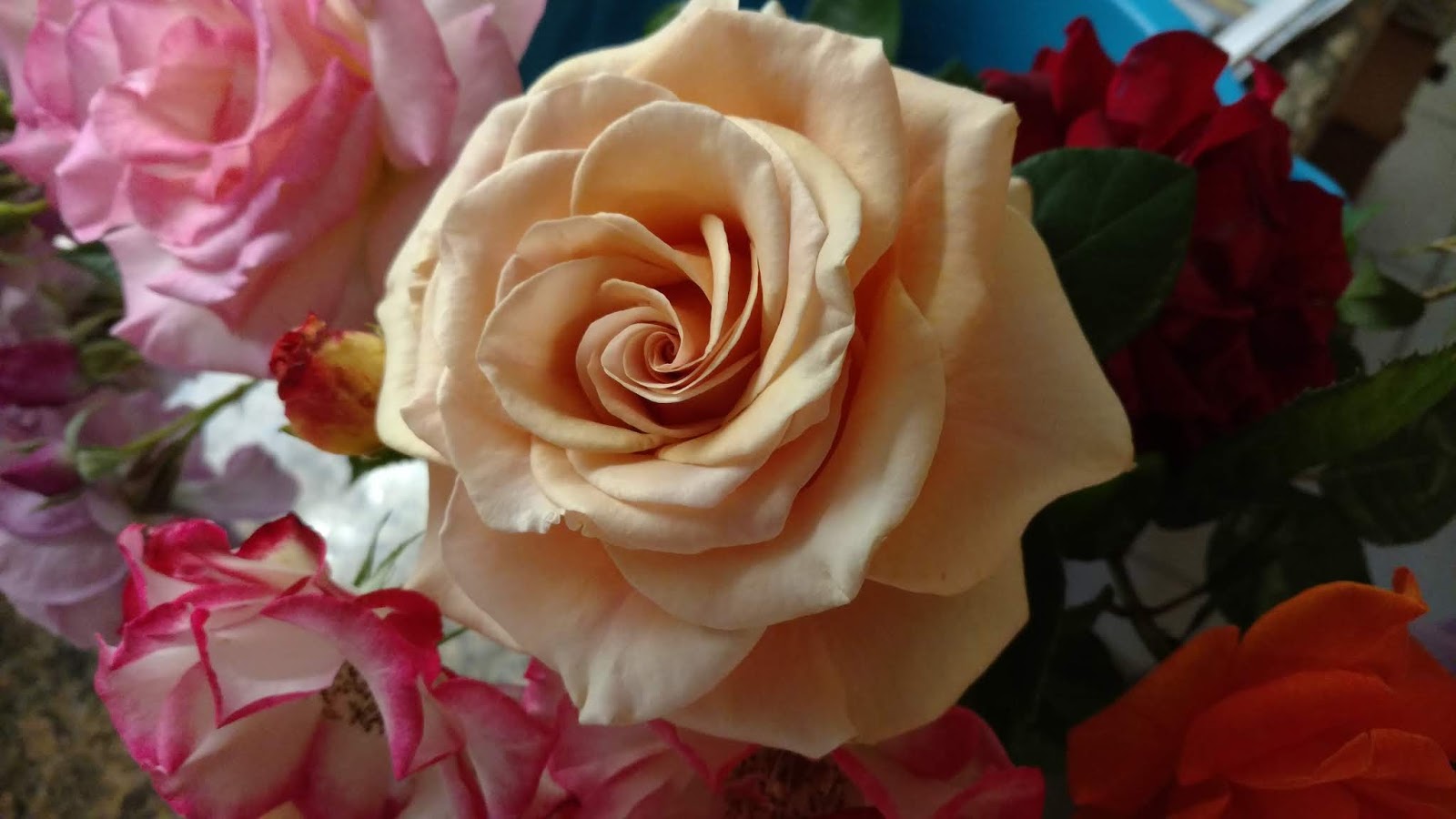
Secret, a hybrid tea, is among the top-rated favorites of local growers.
(Photo: Courtesy Charlotte Owendyk)
Here are some possibilities from local rose experts


In anticipation of my March 21 presentation at the San Francisco Flower & Garden Show, I asked local experts:

What’s the best rose to grow in Sacramento?

From eight local rosarians, I got 14 different answers. These are all solid recommendations from people who, collectively, grow thousands of bushes.

Ellie Longanecker: “My all-time favorite rose is Secret as she seems to be a hybrid tea that can bloom as prolific as a floribunda. The flowers last in the garden and in a vase or in an arrangement; disease resistant and fragrance to boot. On top of all that, Secret has few thorns and big spaces on the stems so you can easily handle her without gloves.”

Charlotte Owendyk: “It is hard to just have one! My all-time favorite is Secret, of course. This hybrid tea has everything. Fragrance, Lovely blooms, and lots of them. Relatively disease resistant. For floribunda, Julia Child is hard to beat. She produces lots of lovely blooms and is disease resistant. Climber favorite is Fourth of July for its eye-catching blooms that are on parade all summer.”

Baldo Villegas: “The ones I love and are commercially available are:

“Dick Clark -- Love the red color with the white reverse; very healthy in my garden; shiny foliage. Always in bloom with as many as 50 blooms at one time. It can get large. In my garden, it grows to 5 to 7 feet tall.

“Sally Holmes -- Can’t have enough of this rose. I grow this shrub as a hedge in my front yard along my white fence. It is a white semi-double rose that blooms in large sprays and, when properly pruned, it can show a mass of color in the garden. It is always in bloom. It grows tall, but it can be pruned to fit just about any place you want a tall plant. It is very healthy in my garden.

“Altissimo -- This climbing rose can be combined with Sally Holmes for landscaping purposes. It is a red single-petaled rose that can grow as a tall hybrid tea rose, on an arbor or as a stand-alone rose. It takes shade well and it is always in bloom in my garden.

“Bees Knees -- This miniature rose is NOT readily available, but with over 40 plants in my garden, I can't have enough of this yellow-blend rose that changes color with the temperature. I grow it as a hedge in two areas in my garden as well as a stand-alone plant. It is very colorful and always in bloom in my garden.”

Dave and Ruth Coop: “At the moment, our best rose is Neil Diamond. Prolific bloomer, and best of all, is its fragrance. Typical one bloom per stem, exhibition form. Decent disease resistance. We have two.”

St. Patrick turns green with summer heat.
(Photo: Debbie Arrington)
Janice Lauinger: “The two roses that do best in my garden are Our Lady of Guadalupe, a pink floribunda that is always in bloom, and St. Patrick, a yellow hybrd tea that holds its bloom so nicely even in the heat of summer!”

Sue Magill: “My choice would be Lyda Rose. She can grow in somewhat shady conditions under or near trees. She is in bloom often and has a nice bush habit, looking nice even if she's not in bloom. She is pretty disease resistant. She has few prickles, can be grown in a large container, and looks like apple blossoms. She is a good cut flower.”

Cherilyn Duncan: “I had always loved Gentle Giant; its color and the ruffly petals seemed especially beautiful to me. When (husband Kent Duncan) passed, more than one person described him as a “Gentle Giant”, so that certainly added to my love of that rose. One of our first trips to Garden Valley Ranch, when Ray Redell was the owner, introduced us to Gold Medal. My mother was with us, and she loved any rose that was yellow or gold, so we bought one for her. Then later, we planted one in our Concord garden, and now have two here in Lincoln. I love the beautiful gold petals with just a faint tinge of pink at the edge. I always enjoy arranging them in a bouquet with Peace; such a delightful combination of soft colors.”

As for my own picks? There are so many!

Here are some more possibilities (and a couple of repeats), all from my garden:

Betty Boop: Fun floribunda with lipstick-red edges.

Brandy: Golden apricot hybrid tea.

California Dreamin’: Huge creamy hybrid tea blooms with purple edges.

Daybreaker: A floribunda that looks like sunrise.

Dorothy Perkins: A century-old baby pink rambler.

Double Delight: Fragrant red and white blooms get redder with heat.

Easy to Please: A new purple-pink floribunda.

Edisto: A red-and-white miniflora that stands out.

Fired Up: Truly unusual yellow-striped red flowers.

Fragrant Lavender Simplicity: A shrub that lives up to its name.

Friendship: One of the best pink hybrid teas for bouquets.

Gemini: Closely related to Secret, only redder

Home Run: A pink single landscape rose, always in bloom.

Joseph’s Coat: Colorful standard for climbers, with red and yellow blooms.

Julia Child: Butter yellow floribunda is yummy.

Kentucky Derby: Big dark red hybrid tea.

Mardi Gras: Orange and yellow floribunda is a party in a vase.

Marilyn Monroe is a winner in rose shows.
(Photo: Debbie Arrington)
Marilyn Monroe: Voluptuous buff-colored hybrid tea is a best in show.

Miss Congeniality: Purple-pink picotee edge makes this creamy hybrid tea different.

Mutabulis: The butterfly rose is an old-fashioned favorite.

Perfect Moment: Brilliant red and gold blend hybrid tea.

Pink Promise: This pale pink hybrid tea has special meaning.

Rainbow Sorbet: This floribunda looks like a rosy sunset.

Shockwave: Brilliant yellow floribunda never fades.

St. Patrick: Gets greener with the heat.

Tamara: A very fragrant apricot shrub from David Austin English roses.

Trumpeter: Hot orange-red floribunda hits the right notes.

Vavoom: Orange juice-hued floribunda has red foliage.

Need more suggestions? Check out the lists at:
www.sactorose.org .
Trumpeter shines in the garden. (Photo: Debbie Arrington)


Comments

0 comments have been posted.

Newsletter Subscription

Sacramento Digs Gardening to your inbox.

Local News

Ad for California Local

Taste Spring! E-cookbook

Strawberries

Find our spring recipes here!

Garden checklist for week of April 19

After this midweek storm, start getting serious about spring gardening. Flowers are blooming about three weeks ahead of schedule. That includes weeds!

* Get ready to swing into action in the vegetable garden – if you haven’t already. As nights warm up over 50 degrees, set out tomato, pepper and eggplant transplants.

* From seed, plant beans, beets, cantaloupes, carrots, corn, cucumbers, melons,  radishes and squash; wait on pumpkins until May. Plant onion sets.

* In the flower garden, plant seeds for asters, cosmos, celosia, marigolds, salvia, sunflowers and zinnias. Transplant petunias, zinnias, geraniums and other summer bloomers.

* Plant perennials and dahlia tubers for summer bloom. Late April is about the last chance to plant summer bulbs, such as gladiolus and tuberous begonias.

* Transplant lettuce and cabbage seedlings.

* April is the last chance to plant citrus trees such as dwarf orange, lemon and kumquat. These trees also look good in landscaping and provide fresh fruit in winter.

* Smell orange blossoms? Give citrus trees a low dose of balanced fertilizer (such as 10-10-10) during bloom to help set fruit. Keep an eye out for ants. If leaves look yellow, your tree may need an iron boost -- apply some chelated iron fertilizer.

* Apply slow-release fertilizer to the lawn.

* Thoroughly clean debris from the bottom of outdoor ponds or fountains.

* Spring brings a flush of rapid growth, and that means your garden needs nutrition. Give shrubs and trees a slow-release fertilizer. Mulch with a 1-inch layer of compost, which helps the soil, but keep it a few inches away from trunks and stems.

* Azaleas and camellias looking a little yellow? If leaves are turning yellow between the veins, give them a boost with chelated iron.

* Trim dead flowers but not leaves from spring-flowering bulbs such as daffodils and tulips. Those leaves gather energy to create next year's flowers. Also, give the bulbs a fertilizer boost after bloom.

* Pinch chrysanthemums back to 12 inches for fall flowers. Cut old stems to the ground.

* Mulch around plants to conserve moisture and control weeds.

Contact Us

Send us a gardening question, a post suggestion or information about an upcoming event.  sacdigsgardening@gmail.com

Taste Summer! E-cookbook

square-tomatoes-plate.jpg

Find our summer recipes here!

Taste Fall! E-cookbook

Muffins and pumpkin

Find our fall recipes here!

Taste Winter! E-cookbook

Lemon coconut pancakes

Find our winter recipes here!

Food in My Back Yard (FIMBY) Series

Lessons learned during a year of edible gardening

WINTER

Is edible gardening possible indoors?

Hints for choosing tomato seeds

Starting in seed starting

Why winter is the perfect time to plant fruit trees

When to plant? Consider staggering your transplants

How to squeeze more food into less space

Potatoes from the garden

Plant a fruit tree now -- for later

Win the weed war by tackling them in winter

Tips for planting bare-root trees, shrubs and vegetables

Time to give vegetable seedlings some more space

Ways to win the fight against weeds

FALL

Dec. 16: Add asparagus to your edible garden

Dec. 9: Soggy soil and what to do about it

Dec. 2: Plant artichokes now; enjoy for years to come

Nov. 25: It's late November, and your peach tree needs spraying

Nov. 18: What to do with all those fallen leaves?

Nov. 11: Prepare now for colder weather in the edible garden

Nov. 4: Plant a pea patch for you and your garden

Oct. 27: As citrus season begins, advice for backyard growers

Oct. 20: Change is in the autumn air 

Oct. 13: We don't talk (enough) about beets

Oct. 6: Fava beans do double duty

Sept. 30: Seeds or transplants for cool-season veggies?

Sept. 23: How to prolong the fall tomato harvest 

SUMMER

Sept. 16: Time to shut it down? 

Sept. 9: How to get the most out of your pumpkin patch

Sept. 2: Summer-to-fall transition time for evaluation, planning

Aug. 26: To pick or not to pick those tomatoes?

Aug. 19: Put worms to work for you

Aug. 12: Grow food while saving water

Aug. 5: Enhance your food with edible flowers

July 29: Why won't my tomatoes turn red?

July 22: A squash plant has mosaic virus, and it's not pretty

July 15: Does this plant need water?

July 8: Tear out that sad plant or baby it? Midsummer decisions

July 1: How to grow summer salad greens

June 24:  Weird stuff that's perfectly normal

SPRING

June 17: Help pollinators help your garden

June 10: Battling early-season tomato pests

June 3: Make your own compost

May 27: Where are the bees when you need them?

May 20: How to help tomatoes thrive on hot days

May 13: Your plants can tell you more than any calendar can

May 6: Maintain soil moisture with mulch for garden success

April 29: What's (already) wrong with my tomato plants?

April 22: Should you stock up on fertilizer? (Yes!)

April 15: Grow culinary herbs in containers

April 8: When to plant summer vegetables

April 1: Don't be fooled by these garden myths

March 25: Fertilizer tips: How to 'feed' your vegetables for healthy growth